
What if parenting teens came with a playbook?
You love your teen more than almost anything in the world. You want them happy, successful, making good decisions. And yet no one ever handed you the manual for what happens when they become a teenager.
What do you do when your teenager stops talking?
What do you do when every conversation becomes an argument?
What do you do when they shut the door and won't let you in?

How do you know if you're handling it correctly?
Most parents were never given a system. So they guess. They try what their parents did. They ask another parent. They search online. They join a group, watch a video, try one technique — then another.
Sometimes something works. Sometimes it makes things worse. And eventually, some parents begin wondering: what am I supposed to do?
"That's why I created this program."
The Story Behind Connecting With Your Teen
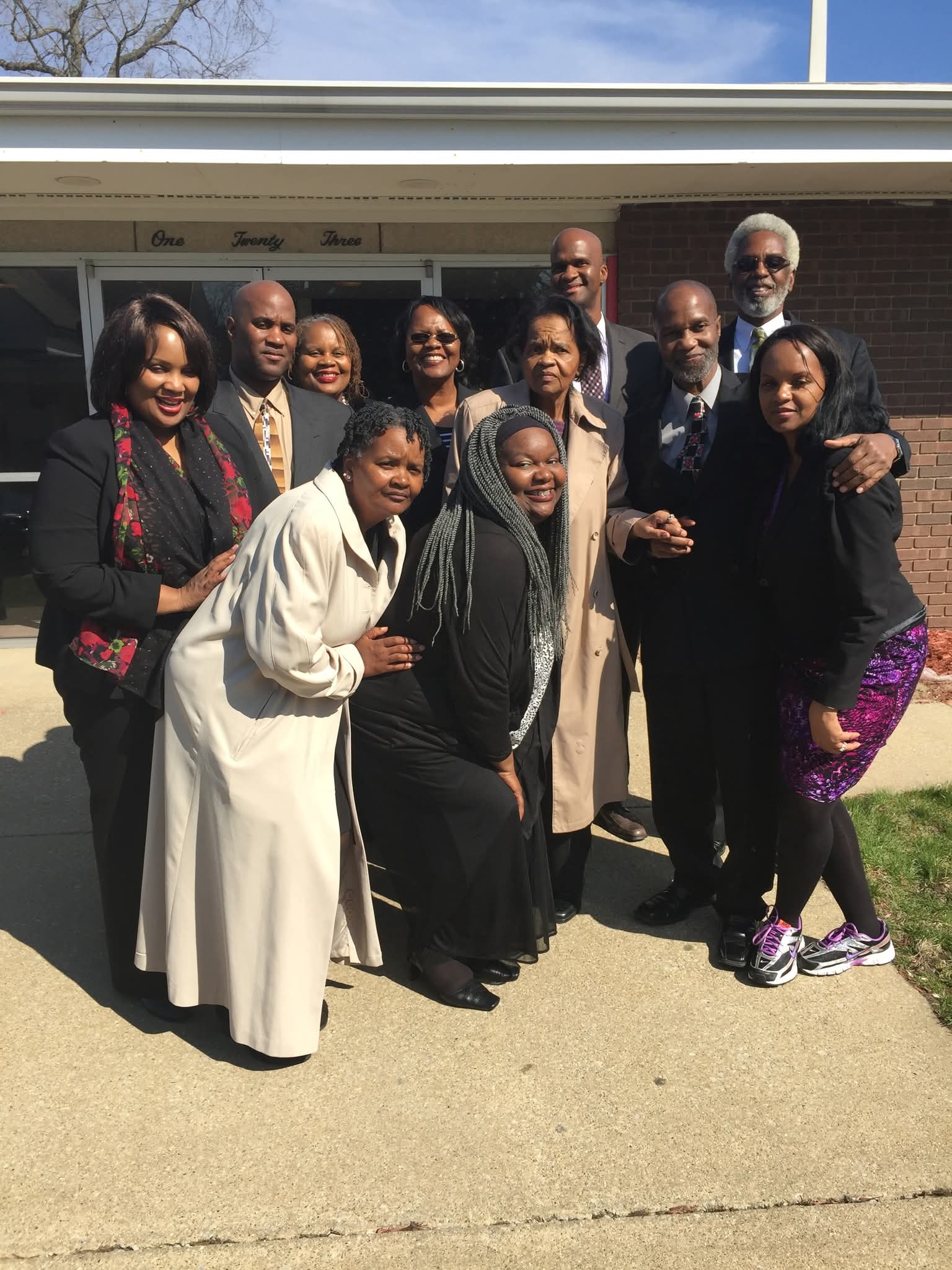 — Dr. Oda's mother, who raised ten children — four doctors, three master's degrees, the rest bachelor's degrees
Dr. Oda's mother raised ten children. When she read Connecting With Your Teen and told her son she wished she'd had it herself, he knew the book was gold.
Early in his career, Dr. Oda had the opportunity to work with Nancy Atkinson, who brought decades of mental-health experience and helped him develop the original principles that became the foundation of his parenting work. Those principles became The 7 Principles for Connecting With Your Teen™ — and eventually, the book.
For nearly 40 years, Dr. Oda has worked in the mental-health field directly with parents, teenagers, and families facing anger, depression, defiance, family conflict, power struggles, peer pressure, and teens who simply shut down.
But his approach was never about telling every family to follow the same steps.
It was about modeling success.
Over the years, Dr. Oda studied and modeled successful families — what strong parents consistently did, how they communicated, how they established leadership in the home, how they handled conflict, and what helped teenagers open up rather than shut down.
He then combined those patterns with decades of real-world experience working directly with parents, teenagers, and families.
Because every family is different.
Different parents. Different teenagers. Different personalities. Different histories. Different communication patterns. Different challenges.
That is why every family begins with an assessment.
Before creating a strategy, Dr. Oda first seeks to understand what is actually taking place within the family — the patterns that are working, the patterns creating conflict, where communication is breaking down, and what may be preventing the family from moving forward.
Assess the family. Understand the patterns. Create the strategy.
The assessment provides the information needed to develop a strategy specifically for that family.
The goal is to understand the principles and patterns behind successful families, identify what is taking place within your family, and create a strategy designed to help your family move further, faster.
That is the foundation of The 7 Principles for Connecting With Your Teen™ — nearly 40 years of modeling success, studying family patterns, and working directly with parents and teenagers to understand what helps families reconnect.
The book was the foundation. This is everything built since.
The Seven Principles were powerful when the book published in 2006. Dr. Oda didn't stop there — for another 20 years he kept working with parents and teenagers, kept noticing patterns, kept refining the tools. Today's playbook brings together eight parts of that work.
The 7 Principles for Connecting With Your Teen™
The original foundation, built with Nancy Atkinson.
Neuro Family Conditioning™
Recognizing the patterns families repeat without realizing it.
The Family Clock™
Leader, Friend, Joker — and knowing what time it is.
The Garden Principles
What you plant around your children will grow.
Communication & Rapport
Opening conversations instead of closing them.
Recognizing Family Patterns
Seeing what's repeating before it repeats again.
Experiential Learning & Role-Playing
Practicing the tools before you need them.
Family Mission & Direction
Giving the family somewhere to walk toward together.
The Family Clock™
Parents play different roles. Three of them sit on what Dr. Oda calls the Family Clock: Leader, Friend, Joker.
Many parents grow uncomfortable stepping into the Leader position — they don't want their teenager angry with them, so they avoid the hard conversation, give in, negotiate something that shouldn't be negotiated. They stay in Friend or Joker mode when the moment calls for something different.
The question isn't which position is "better." Your teenager needs love, connection, and laughter — and there are also moments when they need a parent. The question is simply: what time is it, and are you in the right position for what your family needs right now?
Neuro Family Conditioning™
Have you had the same argument with your teenager again and again — different day, different subject, somehow the same outcome? You already know how it ends before it begins. That's a pattern.
A parent reacts. The teenager reacts. The parent responds. The teenager responds. Eventually everybody knows exactly which buttons to push — automatically, without either side choosing it.
What patterns have developed inside your family — and what might happen once you finally learn to recognize them? That's what we explore inside the program.
Your family is a garden.
Growing up in the Midwest around his father's garden, Dr. Oda learned you can't just throw seeds into the ground and expect everything to work out. Different seeds produce different results — and family works the same way. Every day, whether you realize it or not, you're planting seeds. Your children are watching:
How you communicate
How you handle anger
How you handle stress
How you treat people
How you respond when something goes wrong
Your relationships
Your standards
What you tolerate
How you treat yourself
Some of those seeds become beliefs. Some become habits. Some become the way your child eventually treats their own family.
This isn't about blaming parents.
Most parents are doing the best they know how to do. The real problem is simpler: what if nobody ever taught you what to do?
It's about giving parents a playbook.We don't just talk about the playbook. We practice using it.
It's easy to understand something while sitting in a seminar. It's completely different when your teenager is standing in front of you and emotions are high. This program isn't note-taking for hours followed by going home unsure how to use what you learned.
Imagine understanding your teen at a different level.
Parents & Teens
Stronger communication. Healthier relationships. Brighter futures.
CONNECTING WITH YOUR TEEN™ — THE PARENTING BREAKTHROUGH PROGRAM
No more guessing.
Watch. Learn. Apply. What you plant will grow.
Dr. John Oda, Ph.D. — Step 1 of the Family Transformation Journey